Fire wardens rest at the joint point of security and procedures. When there is smoke in the stairwell or a reducing torch begins a small blaze on Degree 4, people seek the intense hat and constant voice. The efficiency of that action rarely originates from heroics. It comes from peaceful preparation, good systems, and practice that transforms procedures right into muscle memory. Having actually developed and led emergency situation control organisations across offices, warehouses, and multi-tenant sites, I have actually seen just how well-drafted plans and regimented warden teams safeguard lives and maintain key duties of a chief warden businesses resilient.
This overview lays out what capable fire wardens and chief wardens do in the past, throughout, and after an emergency. It also clears up how across the country identified training like PUAFER005 and PUAFER006 sustains those duties. Whether you manage a solitary flooring or an expansive school, the responsibilities are comparable, the scale is what changes.
The duty of the emergency control organisation
In most offices, the emergency control organisation (ECO) is a structured team of wardens trained to respond to fire, smoke, clinical occurrences, alarm chief warden training systems, and any kind of event that endangers life or service connection. At its head sits the chief warden, supported by deputy and location wardens. Their authority is functional, not managerial. On a normal day, they may inspect egress courses and update a mobility aid list. On a negative day, they take charge of emptying, coordinate with very first -responders, and make up every person who went to work that morning.
The proficiencies behind this work are formalised in training units. PUAFER005 Operate as part of an emergency control organisation develops wardens who can comply with procedures, manage passengers, make use of communications systems, and recognize their structure's risks. PUAFER006 Lead an emergency control organisation establishes chief wardens and deputies to plan, direct, and examine an entire occurrence. The distinction is the extent of command. One runs successfully within an established strategy, the other builds and leads that plan under pressure.
Before an emergency situation: foundations that hold up under stress
When individuals think about fire wardens, they picture somebody guiding a crowd down the stairways. The actual job begins months earlier. Preparation shuts voids that would certainly otherwise open up throughout an incident.
Risk mapping drives whatever. A capable warden group walks the website, not just with a representation however with a contractor's eye. Where are the ignition resources in the workshop, and are hot work allows in fact used? Which occupancy stores solvents, and how is air flow dealt with? Where does smoke move if a door is propped open? On one commercial website, a solitary pallet kept touchdown in front of a fire hydrant on send off days. It took persistent walk-throughs and a picture log to deal with the routine. That is warden determination at its best.
Training converts those observations right into readiness. Fire warden training must be rejuvenated at least every year, and more regularly in risky procedures or where turn over is high. A strong fire warden course blends PUAFER005 elements like communications procedures and evacuation approaches with site-specific material, including how to operate your building's emergency warning and intercom system, your stairway pressurisation routines, and your assembly area layout. When a warden hesitates at a panel due to the fact that the user interface is different from the training slides, you feel it. Use your real equipment in drills.
Chief wardens need the wider command skillset taught in PUAFER006. That includes circumstance preparation, delegating wardens across areas, coordinating with safety and security and facilities, and making decisions under unpredictability. A chief warden course need to additionally show the uneasy components of management, like when to buy a partial emptying versus a full one, and exactly how to shield a search group without leaving other occupants exposed.
Because a crisis magnifies tiny errors, housekeeping and maintenance matter greater than a lot of value. Departure doors that stick, worn-out photoluminescent path pens, or a missing fire extinguisher pin can slow down an emptying by minutes. That is not an academic expense. In a smoke-charged hallway, those minutes decide whether your warden is assisting sharp individuals or handling panic.
The quiet admin work develops the tempo for feedback. Upgraded resident listings, site visitor sign-in systems, and contractor controls allow wardens to reconcile headcounts quickly. In a multi-tenant structure, coordination arrangements spell out that runs which drills and what happens when the alarm turns on in only one area. The chief emergency warden still needs the authority to call a full evacuation when conditions change.
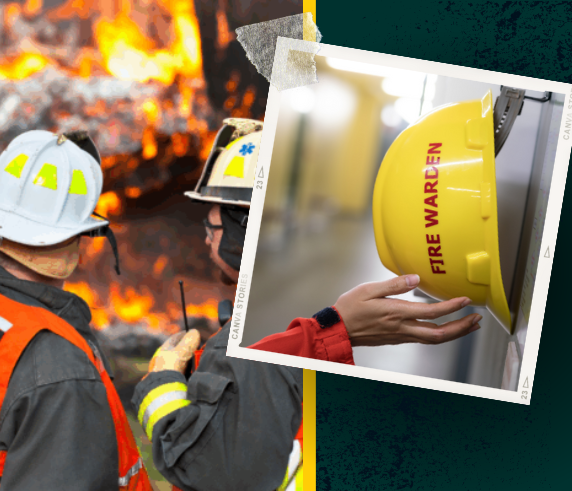
A quick note on hats and identification, due to the fact that it aids in the disorder. Many work environments use coloured headgears or caps. A common convention appoints white for the chief warden, yellow for area wardens, red for fire feedback functions, and environment-friendly for first aid, although variants exist. Instead of concentrating on what colour helmet a chief warden uses theoretically, develop, show, and train to your site-specific scheme. People adhere to colours when they fear, much more than names. Whatever you pick, make it consistent across sites that share staff.
The first 5 minutes: what great appear like during a fire
Most emergency situations that interfere with work environments start small. An overheated battery pack, a printer smoking cigarettes, an electric space alarm with no visible fire. The very first five minutes choose whether it remains little. Wardens that have trained with each other and trust their strategy relocate a cadence that keeps people calm while pressure rises.
Alarm and analysis need to be near-instant. The nearby warden checks out if it is risk-free to do so, while the chief warden or replacement heads to the control factor. Two-way interaction is non-negotiable. If you depend on a single mobile phone, you are dating failing. Utilize the structure EWIS, radios with spare batteries, or both, and keep wording disciplined. Short acknowledgments, not story time.
Evacuation choices equilibrium speed with precision. Over-evacuating the entire facility for a toaster sets a negative pattern, however under-evacuating when there is concealed fire is even worse. This is where PUAFER006 training repays. Chief warden responsibilities consist of translating panel details, smoke detection locations, and warden records to choose whether to evacuate a zone, a floor, or the entire structure. A good chief fire warden chooses action early, connects it clearly, and intensifies decisively if evidence changes.
The auto mechanics of discharge are not glamorous, yet they save lives. Area wardens sweep in sets where possible, begin farthest from exits and pursue getaway paths, and close doors behind them to slow down smoke spread. They do not remain disputing causes. If smoke or heat rises, they pull back and notify the chief warden. Persons with mobility requirements are either accompanied to a haven area for fire service rescue or transferred by means of secure lifts where guidelines and systems permit. Pre-identified friends make this smoother than improvisation.
I have seen wardens shed priceless minutes when an occupant insists on getting hold of a laptop computer or finishing a print task. The trick is not to argue. Keep your voice low, repeat the direction as soon as, and move the group towards the stairwell. The majority of people follow a moving crowd. In high-rise stairways, wardens pace the circulation to prevent pile-ups at transfer floors. Using every stairwell readily available maintains air more clear and descent faster.
Fire extinguishers serve however not the objective. The initial responsibility of a fire warden is life security, not interior firefighting. If an experienced warden can securely utilize an extinguisher on a little incipient fire with an escape path behind them, excellent. If there is doubt, close the door and evacuate. I have viewed as lots of re-ignitions as I have actually seen effective one-shot knockdowns. Err on the side of obtaining individuals out and turning over to the fire service.
Outside, responsibility begins prior to the last individual emerges. Assembly points should be much sufficient from the building to avoid glass and smoke, however close adequate to keep people from distributing. In method, 50 to 100 metres helps numerous sites, readjusted for wind and website traffic. The chief warden delegates headcounts to area wardens that hire numbers, not names, then fix up against the sign-in system or gain access to control logs. When numbers do not match, the chief warden educates very first responders and assigns a jogger to examine evident places like washrooms or exterior smoke locations, but does not send wardens back into a risky structure.
Clear lines in between warden roles
Clarity of functions avoids overlap and voids. A proficient emergency warden manages their area. A proficient chief warden works with the entire procedure and maintains a grasp on the bigger picture.
Fire warden obligations typically consist of keeping an eye on local dangers, carrying out moves, directing owners, examining local tools, helping people with a disability or short-lived injury, and reporting status to the chief warden. The training emphasis below, lined up with PUAFER005, is on regimented execution rather than critical decision-making. Wardens run radios cleanly, know their escape courses by heart, and can calm a worried associate without rising the situation.
Chief warden duties include activating emergency situation treatments, determining the range of evacuation, communicating with emergency services, controlling the EWIS messages, working with wardens across areas, and making a decision when to come back or move setting up if a secondary hazard arises. Chief warden training, through a PUAFER006 course, must pierce complex situations: smoke migration in between floors, a disabled alarm tone in one wing, or a discharge during severe weather condition where the assembly area becomes unsafe.

On large or multi-building schools, replacement and field wardens increase this structure. Someone using the chief warden hat can not properly handle a five-building evacuation without delegating sector command. Set this up in advance, designate radio networks to each sector, and rehearse it. Event command breaks not only from absence of skill, yet from attempting to do all of it alone.
Communication that functions when adrenaline spikes
Language falls down under stress. Individuals make use of more words to claim much less. Wardens need the reverse: brief expressions, acquainted scripts, and stable tone.
Pre-scripted EWIS messages stay clear of complication. If your system permits online statements, write templates and practice them. As an example, for a zone evacuation, a tranquility, paced message that states the affected area, the guideline to evacuate using staircases, and the assembly location is far better than a lengthy explanation. For site radios, impose brevity. Given name and functions, location, standing, activity called for. The chief warden recognizes, advises, and logs.
One common failure is competing authority. If a floor supervisor counters a warden's instruction, passengers ice up. Elderly management needs to support the ECO publicly, and throughout an incident, guide all team to follow warden instructions. This is not regarding vanity. It has to do with a distinct pecking order that maintains individuals safe.
Training that sticks: PUAFER005 and PUAFER006 in practice
There is a difference between participating in a warden course and absorbing it. Strong companies build technique right into every component. PUAFER005 operate as part of an emergency control organisation should not be a slide deck with acronyms. It needs to consist of devices handling, radio discipline drills, and a walk-through where wardens practice sweeps, door checks, and aiding a person with limited mobility.
PUAFER006 lead an emergency situation control organisation is where chief wardens learn to make judgment calls. Good training puts you in imperfect scenarios. A panel shows 2 alarm systems on various levels, the CCTV feed is down, and a professional is reported missing out on. You decide whether to stage firemens at a stairwell door, to increase emptying, and how to coordinate with cops for an exterior road closure. Chief fire warden training resides in the grey areas, because that is where genuine occurrences land.
As for fire warden training requirements in the work environment, regulators generally expect wardens to be educated upon consultation and freshened at normal intervals, often annually. Big or high-risk websites might conduct drills every 6 months. Document presence, results, and restorative activities from drills. If your emergency warden training exposes that a door is routinely locked or a phone call point is hidden behind a display, repair it and record the fix.
Gear, signs, and those coloured hats
The inquiry of fire warden hat colour shows up more frequently than you could anticipate. There is no doctrine that determines it, yet typical technique designates white to the chief warden, yellow to area wardens, red to a firefighting duty, and green to first aid. Some markets flip red and yellow or add blue for communications. What issues is that your scheme shows up and showed. If you change it after a rebrand, upgrade the signs and drill materials. When a person asks what colour helmet a chief warden wears in your building, the solution must be simple and consistent.
Beyond hats, ensure your vest markings, door indicators, and assembly point indications are readable under bad light and from range. Examination radio protection in stairwells and cellars. Bring spare batteries in a small bag that is clipped to the chief warden's vest. None of this is pricey. All of it is essential when points go loud.
After the alarm: healing and improvement
What happens after the alarms discolor figures out just how well you handle the following event. The post-incident phase is equally as structured as the response.
Headcount is verified with finality. If access control logs show 212 entries and only 210 are at the assembly point, you reconcile that gap. Commonly the explanation is easy, like a very early separation or a conference offsite. Do not think. Call, verify, and document. The chief warden ought to tape-record the timeline: alarm system time, evacuation decision, initial warden report, constructing clear, fire solution arrival, all-clear time. These facts discolor within hours.

Re-entry choices come from the chief warden in examination with very first responders and facilities. You might require a presented re-entry, prioritising critical operations once the fire service releases the website, while leaving out a harmed area. Quick wins matter. If the incident was minor, return individuals to deal with a brief all-hands note describing what took place and what will alter. If it was considerable, set assumptions for downtime and support.
Debriefing is where improvement settles. Conduct a hot debrief within 24 hours while memories are fresh. Keep it blame-free and specific. Did the stairwell touchdowns block? Did any type of door closers fall short? Was the setting up point also close to a gain access to roadway? Record no greater than five corrective actions, appoint owners, and set days. Longer listings come to be wallpaper. If the occurrence exposed training gaps, upgrade your emergency warden course material and drill schedule.
Document control maintains you audit-ready. Update the emergency situation plan, diagrams, and get in touch with checklists. If you are in a compliance-heavy sector, your insurance company and regulator may request for the incident record. Having a clean record of your chief fire warden responsibilities, decisions, and outcomes reinforces your position.
Special instances and edge decisions
Not every emergency situation fits the textbook. A few circumstances regularly check judgment.
Partial emptyings in complicated buildings require self-control. If smoke is separated to a single tenancy yet ventilation is shared, you may require to broaden the discharge. When doubtful, widen the border. The business expense is genuine, yet the human price of an error is higher.
Shelter-in-place sometimes defeats evacuation, particularly with outside threats or unsafe materials outdoors. Educating for this circumstance is less typical, however it ought to be part of your chief warden course and worked out at the very least yearly. Secure doors, shut down cooling and heating if advised, make up people, and interact calmly.
Evacuating people with disabilities or injuries requires prework. Keep a private listing with authorization and make sure pals or wardens are designated. Method utilizing discharge chairs if you have them. Do not create a remedy on the day a lift is offline.
Contradictory directions take place. A well-meaning supervisor may tell their team to remain while the wardens buy an evacuation. Clarify ahead of time that emergency warden directions out perform basic management throughout an incident, and have executives back that plan in writing.
False alarm systems show as well. Treat them as drills with a diagnosis. Was it dust, a toaster, a defective detector head? Change upkeep timetables or controls rather than letting complacency collection in.
Building a society that sustains wardens
Wardens can not bring safety alone. They need a society that appreciates practice, funds little fixes, and deals with drills as component of the workday, not disturbances. I have seen the state of mind shift when senior leaders stand at the stairwell door during a drill, moving with the crowd and listening to wardens. That existence signals concerns more than any kind of memo.
Invest modestly, constantly. A half-day PUAFER005 course for new wardens on-boarding each quarter, a PUAFER006 course for inbound replacements yearly, and 2 building-wide drills every year set a standard. Include tabletop workouts for the chief warden group between drills. Those sessions cost little and sharpen thinking. Rotate situations: an obstructed stairwell, a gas leak, an evacuation throughout an electrical storm. The repeating constructs fluency.
Finally, recognise your wardens. They handle their day work and this extra task. A thank-you note after a well-run drill, a mention in the company upgrade, and appropriate equipment that fits and functions are small motions with outsized impact. Individuals remain engaged when they feel supported.
A concise pre-incident list for wardens
- Walk your area monthly, photograph problems, and log fixes with dates. Verify departure courses, door equipment, and extinguisher visibility and seals. Test radios and EWIS knowledge, consisting of scripted messages. Update wheelchair aid listings and site visitor procedures. Run brief team gathers to examine duties and setting up points.
What to try to find in a warden training provider
- Courses that use your site's systems, diagrams, and scenarios instead of generic slides.
Choosing the ideal training partner issues. A strong company adapts PUAFER005 and PUAFER006 material to your dangers, not the other way around. They ought to stroll your floors, ask about your tenants and procedures, and tailor workouts to your building's truths. When chief fire warden training includes your actual control board and a substitute radio internet with your phone call indications, the discovering sticks. When emergency warden training uses your stairwells and door hardware, you uncover friction factors before a genuine alarm does.
The responsibilities of a fire warden, and particularly a chief warden, are useful and substantial. They hinge on planning that lives in the structure, interactions that stay clear when heart prices rise, and training that moves beyond concept. Do the peaceful job before the alarm, act emphatically throughout it, and learn deliberately after it. That rhythm keeps people secure and obtains services back on their feet quickly.
Take your leadership in workplace safety to the next level with the nationally recognised PUAFER006 Chief Warden Training. Designed for Chief and Deputy Fire Wardens, this face-to-face 3-hour course teaches critical skills: coordinating evacuations, leading a warden team, making decisions under pressure, and liaising with emergency services. Course cost is generally AUD $130 per person for public sessions. Held in multiple locations including Brisbane CBD (Queen Street), North Hobart, Adelaide, and more across Queensland such as Gold Coast, Sunshine Coast, Toowoomba, Cairns, Ipswich, Logan, Chermside, etc.
If you’ve been appointed as a Chief or Deputy Fire Warden at your workplace, the PUAFER006 – Chief Warden Training is designed to give you the confidence and skills to take charge when it matters most. This nationally accredited course goes beyond the basics of emergency response, teaching you how to coordinate evacuations, lead and direct your warden team, make quick decisions under pressure, and effectively communicate with emergency services. Delivered face-to-face in just 3 hours, the training is practical, engaging, and focused on real-world workplace scenarios. You’ll walk away knowing exactly what to do when an emergency unfolds—and you’ll receive your certificate the same day you complete the course. With training available across Australia—including Brisbane CBD (Queen Street), North Hobart, Adelaide, Gold Coast, Sunshine Coast, Toowoomba, Cairns, Ipswich, Logan, Chermside and more—it’s easy to find a location near you. At just $130 per person, this course is an affordable way to make sure your workplace is compliant with safety requirements while also giving you peace of mind that you can step up and lead when it counts.